Understand 2.5 GbE, 5 GbE, and 10 GbE networking, where it helps, and when gigabit remains enough.
What multi-gig means
Multi-gig Ethernet includes speeds above 1 Gbps, commonly 2.5, 5, and 10 Gbps.
The full path must support the speed, including gateway, switch, cabling, access point, and client.
Where it provides value
Fast local storage, creative workflows, backups, servers, high-capacity WiFi, and fiber internet may justify faster links.
Many ordinary devices do not need more than gigabit.
Access-point uplinks
Some newer access points use 2.5 GbE or faster uplinks to avoid a one-gigabit bottleneck under heavy aggregate load.
That benefit depends on client count, radio use, and switching.
Cabling considerations
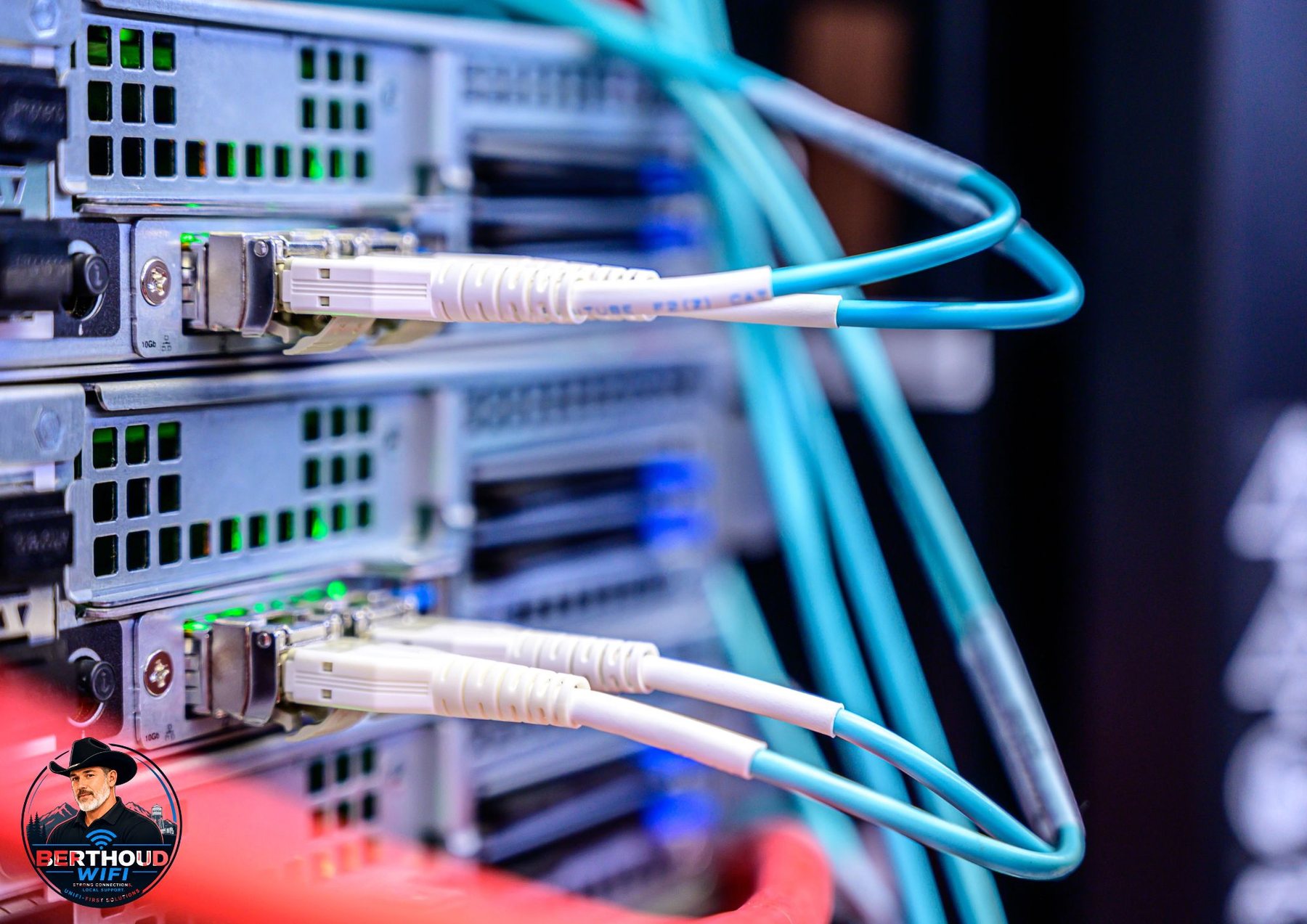
Existing Cat6 may support multi-gig speeds over suitable distances. Cat6A or fiber may be chosen for specific longer or higher-capacity links.
Termination quality and testing matter as much as cable labels.
Avoid unnecessary upgrades
Upgrading every port to 10 GbE can add cost, heat, and complexity without improving everyday use.
We identify where faster links matter and keep standard gigabit where it remains appropriate.
Serving Northern Colorado
Berthoud WiFi is based in Berthoud and serves Loveland, Fort Collins, Longmont, Erie, Boulder, Windsor, Johnstown, Timnath, Mead, Frederick, Firestone, Wellington, Greeley, and nearby communities.
Frequently asked questions
Do I need multi-gig for WiFi 7?
Not always, but selected WiFi 7 access points can benefit from faster uplinks in high-demand environments.
Can Cat6 support 2.5 GbE?
Often yes, depending on distance and installation quality.
Will multi-gig improve internet speed?
Only if the internet service and all network components support the higher rate.
Is 10 GbE necessary at home?
Usually only for specific workflows such as local storage, media production, or very fast fiber service.
Related resources
Need help choosing or installing the right system?
Tell us about the property, current equipment, and what needs to work better.
Request a Quote