
Electrician or Low-Voltage Installer: Who Should Run Home Ethernet?
Compare electricians and low-voltage network installers for home Ethernet, Cat6, access points, cameras, patch panels, testing, racks, and new-construction pre-wire.
Compare electricians and low-voltage network installers for home Ethernet, Cat6, access points, cameras, patch panels, testing, racks, and new-construction pre-wire.
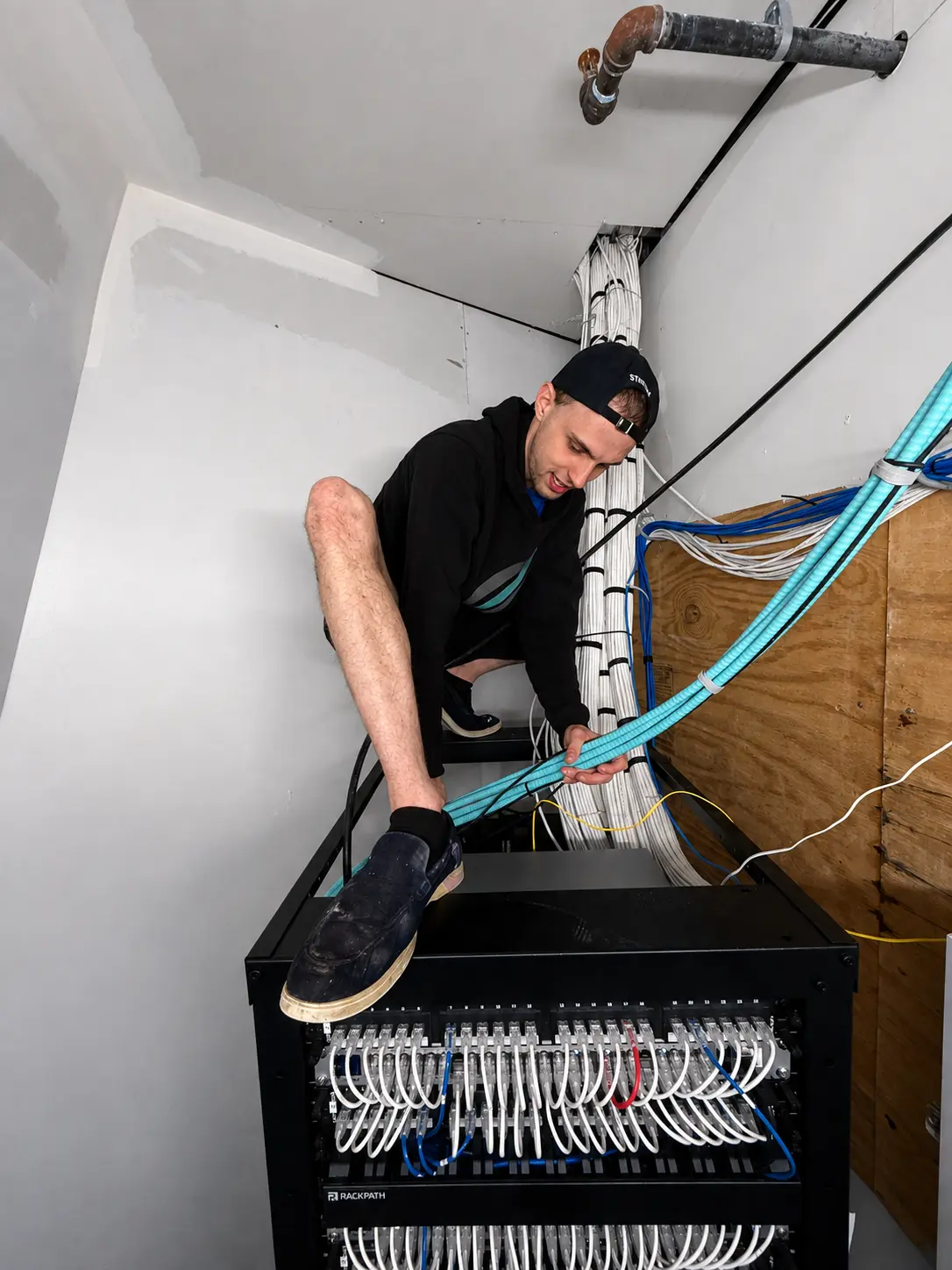
Some electricians install excellent low-voltage cabling, and some focus primarily on line-voltage power. The title matters less than the scope, experience, testing, and final handoff. Ethernet is not difficult because the voltage is high; it is difficult because routing, termination, performance, and network design all have to be correct.
A cable can pass a basic test and still terminate in the wrong place for WiFi coverage, camera identification, or the equipment rack. A network-focused low-voltage installer can coordinate device placement, switching, PoE budgets, internet service, VLANs, and the final configuration.
Electricians remain essential for outlets, dedicated circuits, grounding, and other line-voltage requirements. Low-voltage installers focus on data cabling and network systems. Well-run projects coordinate both trades instead of assuming one scope replaces the other.
Berthoud WiFi provides home Ethernet installation, testing, rack work, WiFi, and camera integration across Northern Colorado.
Tell us about the property, the problem areas, and what you need the network to support.
Share the property, the problem areas, and what you need the network to support. We will review the details and follow up with practical next steps.