
Where Should WiFi Access Points Go Before Drywall?
How to place wired WiFi access points in a new home before drywall, including floor plans, building materials, ceiling locations, outdoor spaces, and coverage testing.
How to place wired WiFi access points in a new home before drywall, including floor plans, building materials, ceiling locations, outdoor spaces, and coverage testing.
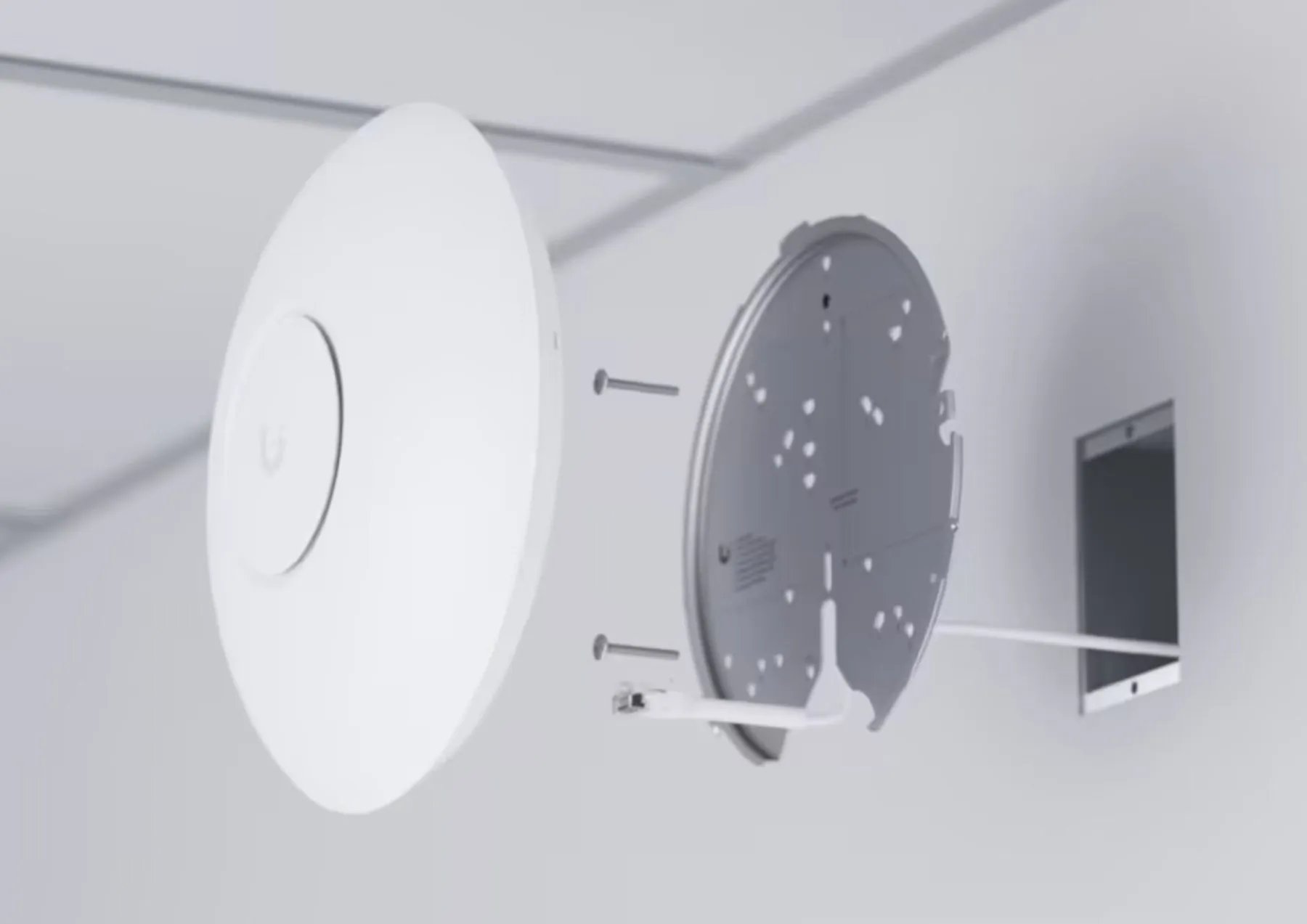
Access-point locations should be chosen from the finished floor plan, not simply spaced at equal distances or placed wherever the cable installer has easy access. Walls, floors, stone, metal, ductwork, cabinetry, ceiling height, and room use all change coverage.
Prioritize offices, bedrooms, living spaces, media rooms, garages, patios, pools, and other areas where reliable service matters. Then account for device density and the construction between those spaces and the proposed access point.
Many professional access points are designed for ceiling or high-wall mounting. Avoid hiding them in metal cabinets, mechanical rooms, or crowded utility closets. A visually discreet location is useful only if it still serves the intended coverage area.
Each access point should have a home-run Ethernet cable to the network location. Verify cable category, route length, PoE requirements, and whether the planned switch supports the access point’s speed.
Exterior living areas may need outdoor-rated access points. Detached garages, shops, and gates may need fiber, conduit, or a point-to-point bridge before local WiFi can be added.
Berthoud WiFi reviews access-point placement as part of custom-home technology planning and completes final tuning after the home is occupied.
Tell us about the property, the problem areas, and what you need the network to support.
Share the property, the problem areas, and what you need the network to support. We will review the details and follow up with practical next steps.